
The craft
What Does a Personal Historian Do?
A personal historian interviews, researches, writes, and returns a life story for review before anything is final — here's what the job actually covers, stage by stage.
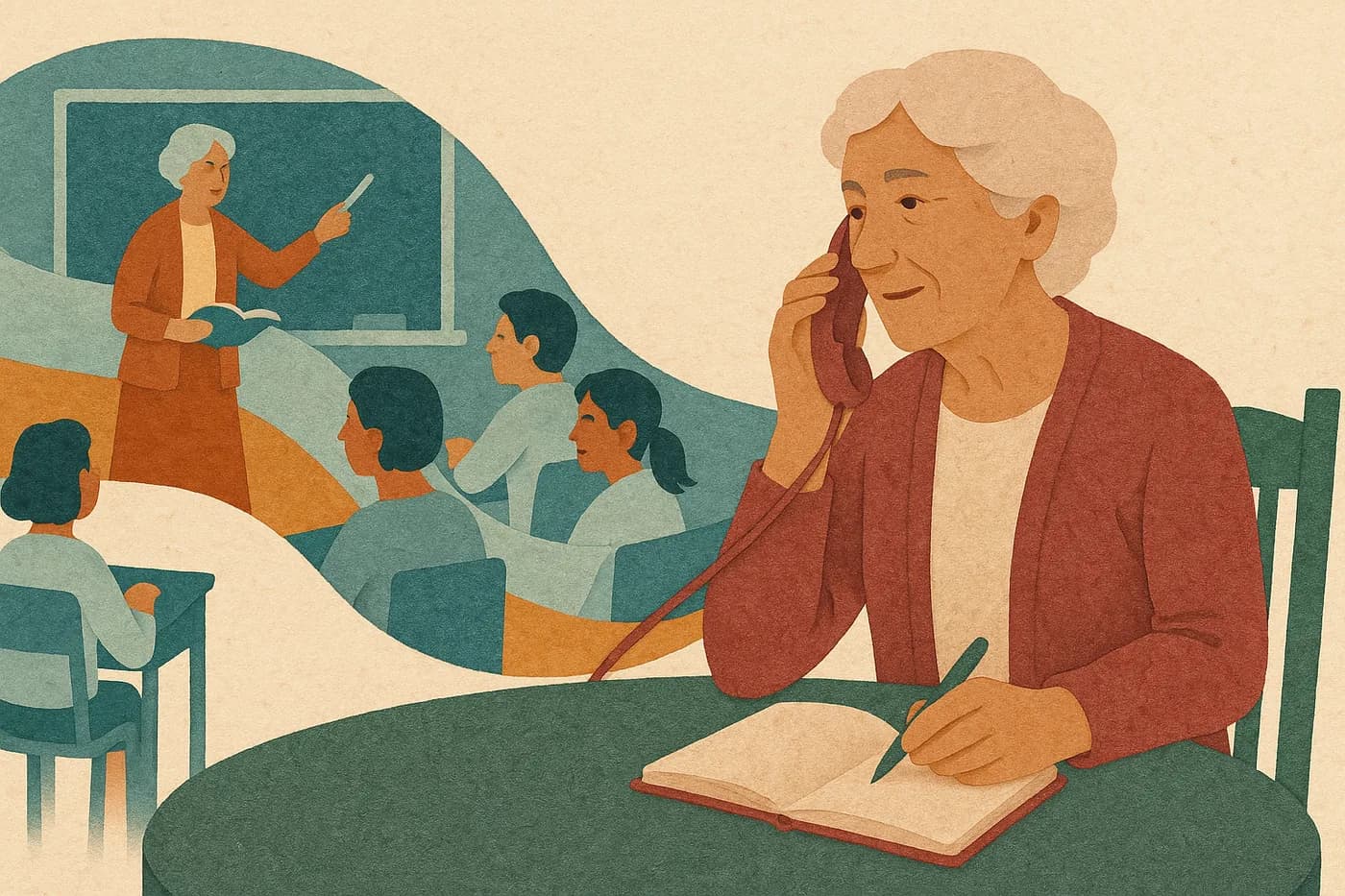
Search "personal historian" and the results split in two directions almost immediately. One is a decades-old genealogy record-keeping program that happens to share the exact name — built for organizing family-tree research, not for interviewing anyone. The other is a profession: someone trained to interview, research, and write down a life, or a family's history, for the people who lived it. The two have nothing in common but the words.
A personal historian's job is to turn a life, or a family's history, into a lasting written or recorded account. The work moves through roughly four stages: interviews with the subject and the people who knew them, research to check names, dates, and context, writing or editing the material into a readable account, and a review pass where the subject or family approves what's kept before it's treated as finished. What gets delivered at the end varies by project. The process behind it rarely does.
What the work actually involves
The interviewing is the core of the job, and it looks less like an interrogation and more like a series of return visits. A personal historian usually talks with the subject more than once, because a single sitting rarely surfaces more than the most-told version of a story — the one that's been repeated at holidays until it has a fixed shape. Follow-up conversations are where the specific, less-rehearsed material tends to show up: what a room smelled like, who else was there, what was left out of the family's usual telling.
Research runs alongside the interviews rather than replacing them. That can mean checking a remembered date against a birth or marriage record, cross-referencing an address against an old photograph, or simply asking a second family member the same question to see where the accounts agree and where they don't. None of this is genealogy in the record-collecting sense — a personal historian isn't building a family tree. It's closer to fact-checking a memory gently enough that the person telling it doesn't feel corrected.
From conversation to a written account
Once the interviews and research are in hand, the material gets shaped into something a reader can follow — a narrative, a structured Q&A, or a written account organized by chapter or theme, depending on the personal historian's approach and what the family wants. A useful way to picture the finished project is by its parts, since "personal history" describes a bundle of deliverables more often than a single object: the raw recordings, a verified timeline of names and dates, a written narrative built from the interviews, photographs with captions that identify who and when, and an index pointing back to where each claim in the writing came from. Not every project includes all five. Knowing which ones a given personal historian actually produces is a more useful question than asking what the "finished product" looks like, because the honest answer is that it depends.
Review: nothing is final until the person it's about signs off
The step that separates a careful personal historian from a rushed one is what happens after the writing is done. The Oral History Association's published practice guidelines — written for interviewers working with any subject's life history, not personal historians specifically — describe narrator review as a standard part of the process: the person interviewed reads or hears the finished account and can correct it before anyone treats it as final. A personal historian who skips that step isn't offering a faster version of the same service. They're offering something else, and it's worth asking directly whether review is included.
This matters more than it might sound like, because a remembered account is not the same thing as a verified historical fact, and no amount of research fully closes that gap. Two siblings can describe the same childhood kitchen differently and both be telling the truth as they remember it. A personal historian's job is to capture that disagreement honestly, not to quietly pick a winner and write it down as settled.
What a personal historian doesn't do
A few boundaries are worth naming plainly. A personal historian doesn't take over the decision of what gets included — that stays with the person whose story it is, not with an adult child who hired the historian on someone else's behalf, however good their intentions. A personal historian doesn't build or research a family tree; that's genealogy, a related but separate skill. And a personal historian doesn't promise a complete or definitive record. Memory has gaps, and a good one will say so in the finished account rather than paper over them.
Questions to ask before you hire a personal historian
- Who actually writes the finished account — the personal historian, or does the subject write it themselves with the historian's help organizing material?
- How many interview sessions are typical, and can more be added if the first few don't cover enough ground?
- Do I (or the person being interviewed) see and approve the writing before it's considered final, or only after?
- What happens to a detail two family members remember differently — is the disagreement preserved, or does the historian pick one version?
- What exactly gets delivered at the end — recordings, a written narrative, photographs with captions, source notes, all of it, some of it?
- Who keeps the recordings and the research afterward, and can the family get copies?
- If the person being interviewed changes their mind about something they said, is there a real process for revising or removing it?
A personal historian with a clear, specific answer to each of these is being straightforward about the process, whatever their particular approach turns out to be. A vague answer to the review and access questions is worth treating as a real signal.
Where Joan fits, honestly
Joan works from the same core idea a careful personal historian does — interviews, then review, then a record the storyteller has approved — but built as an ongoing series of phone conversations rather than a fixed project with an end date, and shaped around an evolving archive rather than one finished manuscript. Nothing said in a call becomes part of the archive until the storyteller has heard it back and approved it. For how that compares to ghostwriting, transcription-only tools, and prompt books, memoir writing services lays out the fuller picture.
If you'd rather hear how a guided conversation actually works than take a description's word for it, the first call is free and there's no card.