
Conversations
How to preserve a parent’s stories without giving them homework
A practical guide to making family storytelling feel like a conversation, not an assignment.
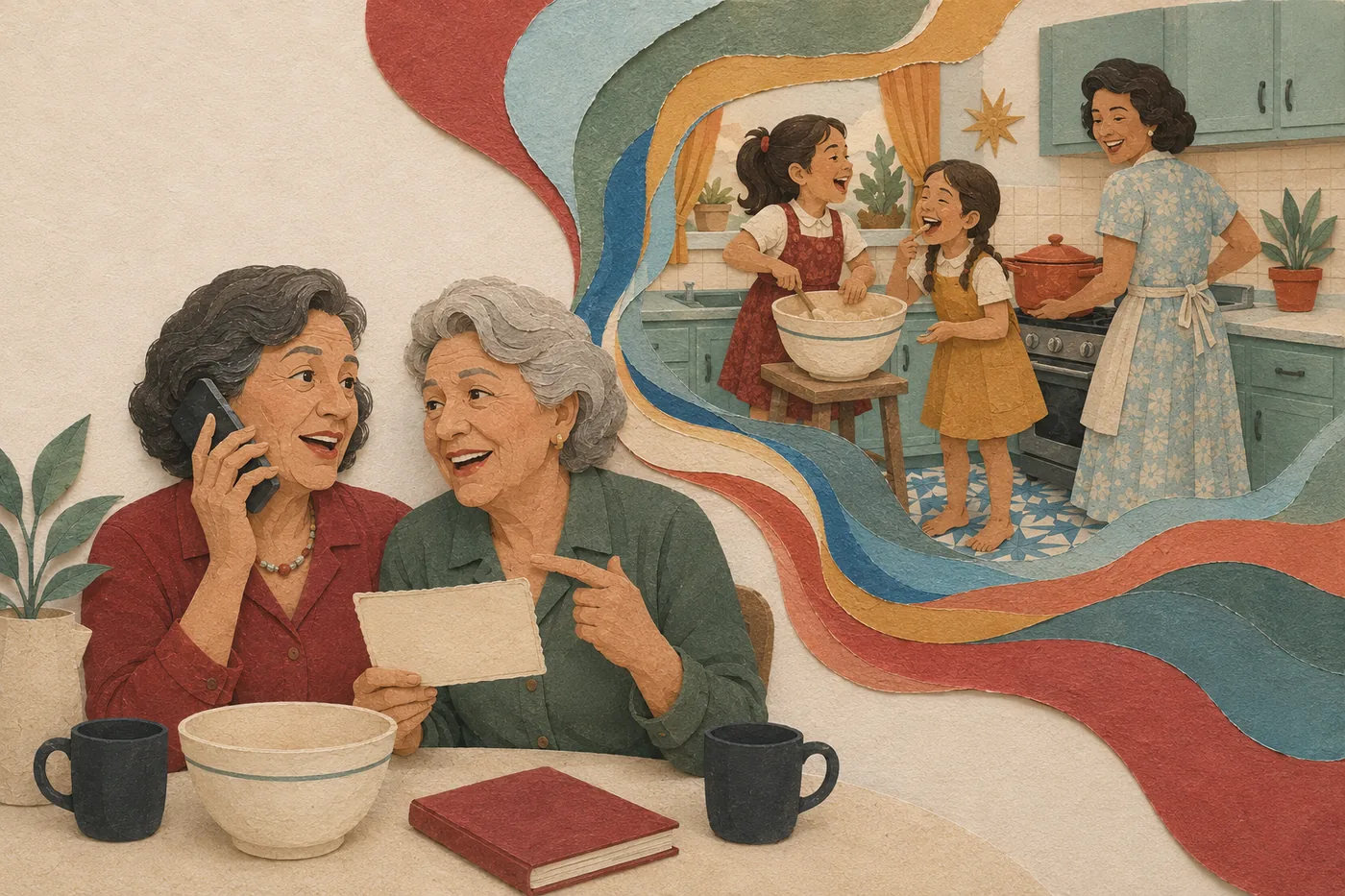
Most families do not fail at this because they do not care. They fail because the only tools on offer ask an eighty-year-old to sit down and write.
A journal, a prompt book, a shared document titled “Mom’s stories” — they all put a blank page in front of the person least likely to fill it. The stories stay in conversation, where they have always been, and then the conversations stop.
Start with a call, not a project
The useful first move is smaller than it sounds. Ask one specific thing, on the phone, and listen all the way through. Not “tell me about your childhood.” Something with a room in it: the kitchen she remembers, the street he grew up on, the job that did not last.
Specific questions get specific answers. General ones get the polished anecdote the family already knows.
Do not turn it into homework
If you send a list, you have given them a task. Tasks get postponed. A conversation at a time they already have free — after breakfast, before the news — has a much higher chance of happening twice.
Write down what you heard afterward, in their phrasing, not yours. The phrasing is the part that sounds like them later.
Keep going back
One good conversation is a start. The second one is where it becomes a record, because you can return to a name they mentioned and ask what happened next. That is the difference between a nice call and a biography: continuity.
Joan exists to do that part of the work — to call, to remember, and to shape what was said into a story the storyteller still has to approve. The family does not have to become the interviewer.
If you want that first conversation handled for you, join Founding Families.