
The craft
What makes a life story sound like the person who lived it
Why the pauses, phrases, humor, and small contradictions matter as much as the facts.
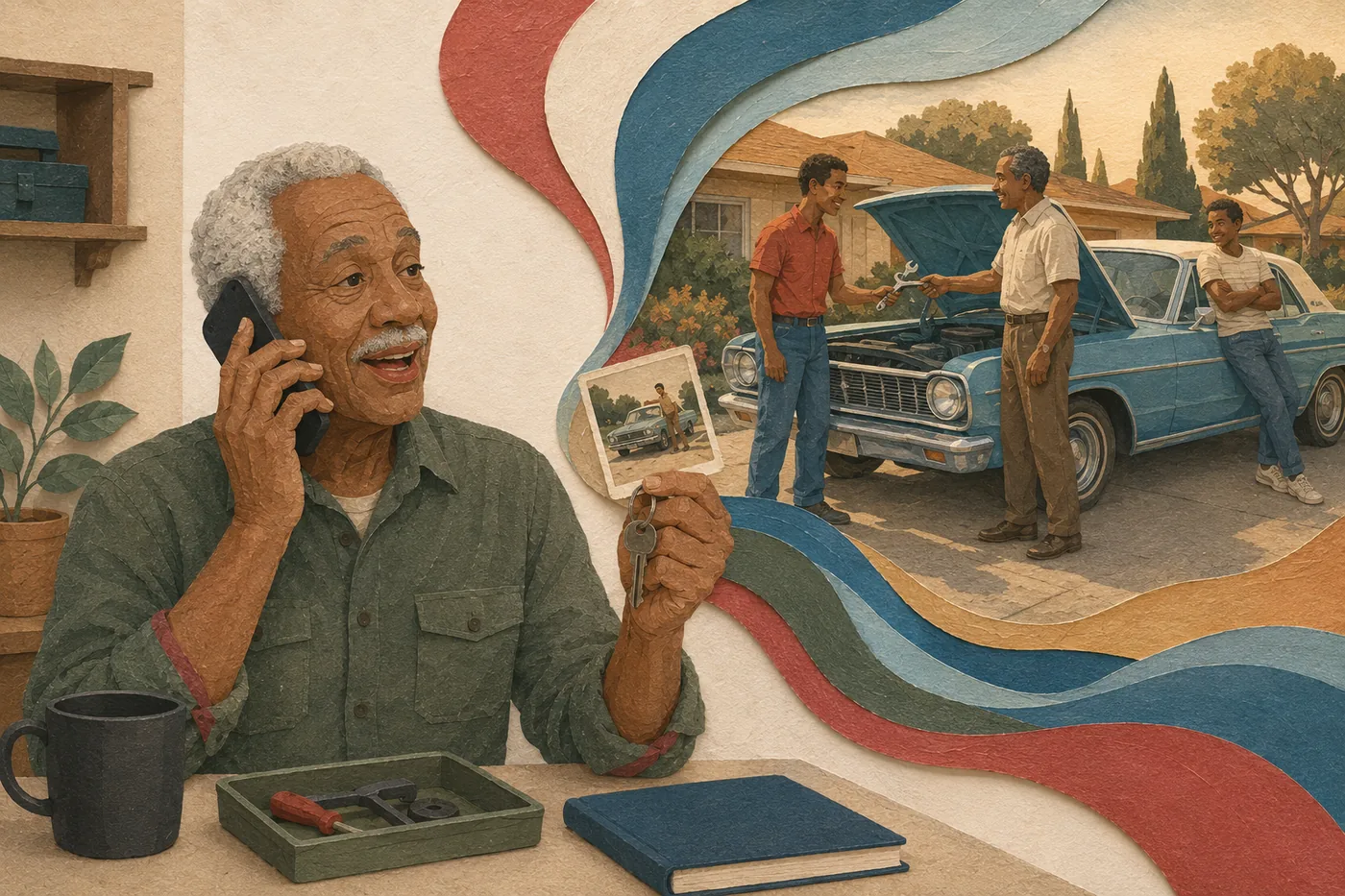
A life story can be accurate and still be wrong. The dates line up, the names are spelled correctly, and it does not sound like them at all.
The thing families recognize is not the plot. It is the way a person tells it: the joke that does not quite land, the detour that turns out to be the point, the phrase they have used for forty years.
Keep the order they remembered it in
People do not recall a life in chronology. They recall it in rooms. Reordering everything into a clean timeline can make a better-reading document and a worse portrait. If they thought of the wedding while talking about a winter, leave the wedding where it arrived.
Keep the words
Smoothing a sentence is the most tempting edit and the most expensive. “Winter lasted too long here” is a person. “The winters were difficult” is a caption. Joan is instructed to keep the first kind and to treat the second as a failure.
Keep the contradiction
Two accounts of the same evening will disagree. The honest response is to ask, or to leave both visible. Inventing a bridge would make a neater story and a worthless record. Our promise is built on that refusal.
Keep the recording next to the page
This is not a technical preference. It is the only way a family can ever check that what they are reading is what was actually said. A story that cannot be traced back to a conversation is just prose.
If you want a story written that way — shaped by Joan, approved by the storyteller, attached to the call it came from — join Founding Families.