
Trust
AI Biography Writers Need a Source of Truth
An AI biography writer can produce fluent prose fast. What makes the result trustworthy is recordings, traceability, and the storyteller's own approval.
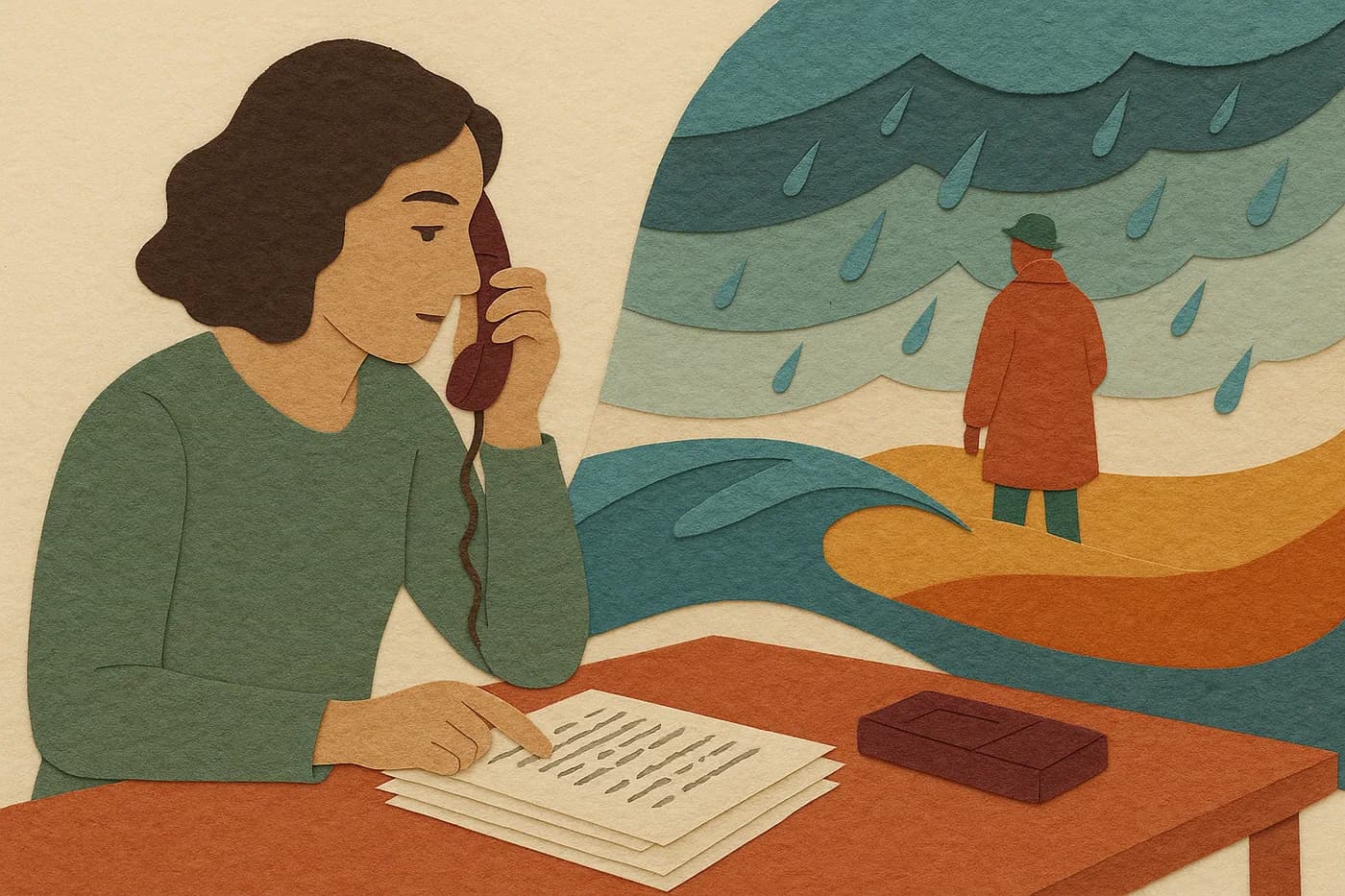
Type a name, a few facts, and a handful of memories into a chatbot, and it will hand back a warm, well-organized paragraph that reads like a finished biography. That speed is the whole appeal of an AI biography writer — and it is also the part worth slowing down for, because fluent prose and an accurate account are not the same achievement.
An AI biography writer is only as trustworthy as its source of truth. Fluent output on its own proves nothing; what matters is whether every sentence traces back to something the storyteller actually said, whether that trail stays checkable later, and whether the storyteller reviewed and approved the result before anyone treats it as finished. Without those three things, a biography is a good guess wearing a confident voice.
What "AI biography writer" usually means
Most tools under this label work the same basic way: you supply facts, answers to a set of questions, or a rough transcript, and a language model assembles that material into readable narrative prose — scenes, transitions, a consistent voice. The output can be genuinely well written. Sentences connect, paragraphs have shape, and the whole thing reads like something a person sat down and composed.
That fluency is a property of the language model, not a guarantee about the life it's describing. A model trained to produce plausible-sounding text will do exactly that whether or not it has enough real material to work with — and when a detail is thin or missing, the same fluency that makes the good parts readable can quietly paper over the gaps with something that merely sounds right.
Fluent prose is not the same as an accurate one
This is the property worth naming plainly: language models are well documented to generate confident, grammatically smooth text even when a specific fact inside it is wrong. A date gets shifted by a year, a sibling's name gets swapped, a job title gets upgraded — and none of it reads as a mistake, because the sentence around it is polished. A typo looks like an error. A fabricated detail delivered in perfect prose usually doesn't look like anything at all.
For a family history, that's a particular kind of risk. The whole point of writing a life down is to get it right — including the parts that are uncertain, disputed, or remembered differently by different people. A remembered account is not the same thing as a verified historical fact, and the two should stay distinguishable on the page rather than getting smoothed into one confident paragraph. An AI biography writer that resolves every uncertainty for readability isn't saving anyone work; it's quietly replacing what someone actually said with what reads better.
What a source of truth actually requires
Three things separate a trustworthy AI biography writer from a fluent one:
Recordings. The narrative should trace back to something recorded, not to a form filled out from memory of a memory. A recording is what lets anyone — the storyteller, a sibling, an editor — go back and check what was actually said, rather than trusting a summary of a summary.
Traceability. A specific claim in the finished text should be checkable against the specific place it came from. If a paragraph says a grandmother worked at a shipyard during the war, there should be a way to find the moment that detail was actually said, by whom, and in what words — not just a general sense that "the AI must have gotten it from somewhere."
Storyteller approval. The Oral History Association's published practice guidelines describe narrator review as a standard part of a responsible process — the person whose life is being recorded reads or hears the account back and corrects it before anyone treats it as settled. An AI biography writer that publishes its output as final without that step has skipped the one safeguard that catches an invented or misremembered detail before it becomes the permanent record. Nothing enters the archive without approval covers what that gate looks like in practice, and why silence is never treated as consent.
Questions worth asking before you trust one
Before letting an AI biography writer's output stand as someone's life story, these six questions are worth asking directly:
- Does the narrative come from an actual recording, or from a form filled out once and expanded by the model?
- Can a specific sentence be traced back to the specific moment it came from?
- Does the storyteller read or hear the finished account and get to correct it before it counts as final?
- If a detail is uncertain or two family members remember it differently, does the text say so — or does it quietly pick one version?
- What happens to a fact the model invented to fill a gap? Is there any way to catch it, or does it just look like the rest of the prose?
- Who can see the underlying material the narrative was built from, and can the storyteller get it back?
A tool that answers all six plainly is being honest about how it works. A tool that only shows you the finished paragraph is asking you to trust fluency instead of a process.
Where Joan fits, honestly
Joan builds every story from an actual recorded conversation, not a form. What goes into the archive is what the storyteller said, checked against the recording it came from, and nothing becomes part of the record until the storyteller has read it back and approved it — the same gate described here applies to every piece of writing Joan produces. The same discipline — record, trace, review — is worth demanding of any AI biography writer, not only Joan's version of one; what a memoir app should actually do for the storyteller walks through the wider set of capabilities worth checking before you trust a tool with a life.
Fluent prose is easy for a model to produce. A source of truth is not, and it's the part worth asking about before the story on the line is someone's own.
If you'd rather see how a recorded, reviewed conversation actually works than take a tool's word for it, the first call is free and there's no card.