
The craft
How a Family Biography Holds More Than One Point of View
What separates a family biography from a single life story, why the throughline isn't a person, and a rubric for choosing the right one before you start.
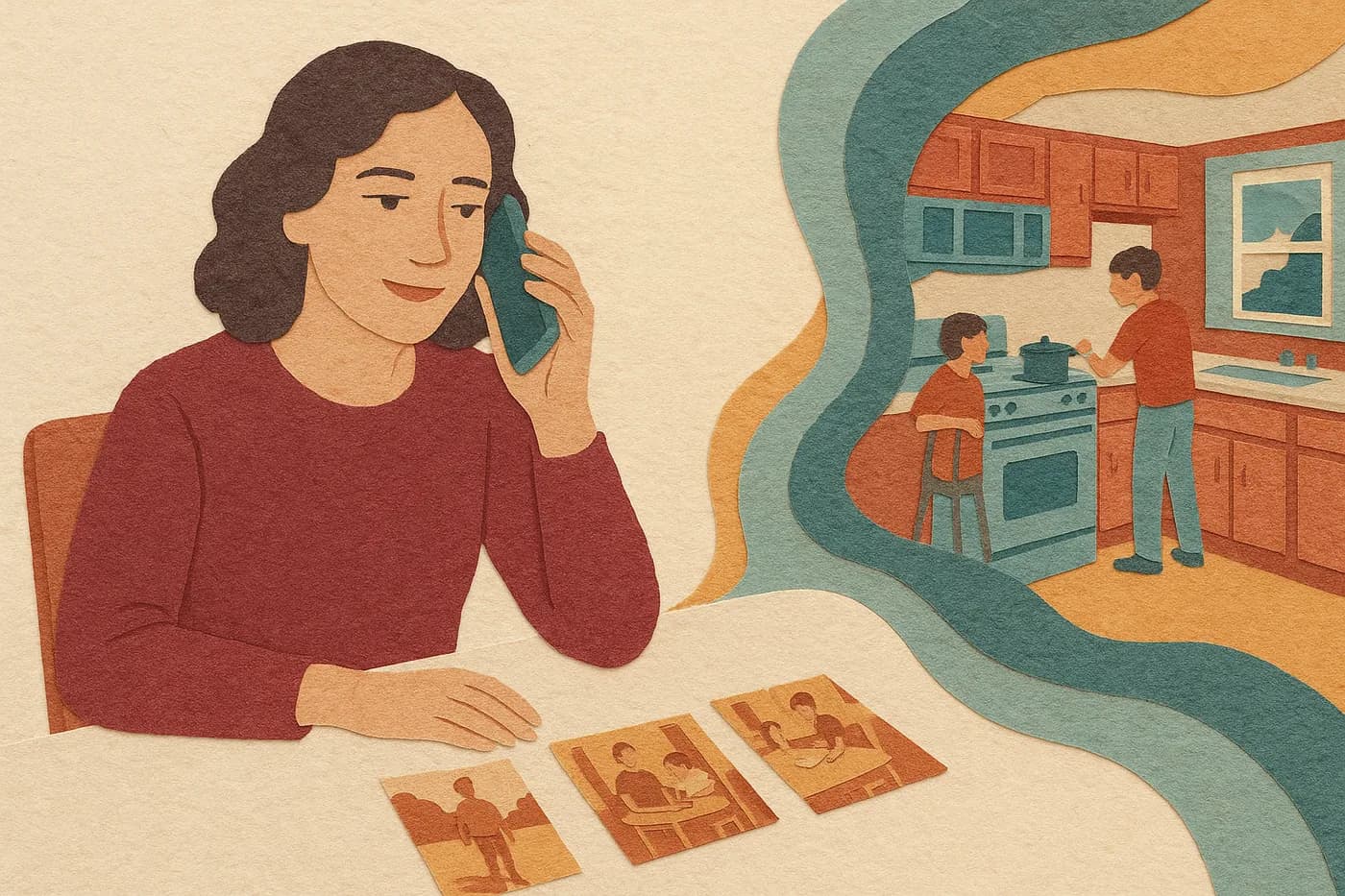
Somewhere between a family tree and a single parent's life story sits a different kind of project — one where the subject isn't a person but a family, and "whose story is this" doesn't have one answer.
A family biography follows more than one family member's own account of a shared history, rather than one person narrated from birth to the present. Its throughline is usually a place, an event, or a generation the family holds in common — a house, a business, an immigration, a decade — not a single chronology. Because more than one person is a subject, whose voice anchors the book, how disagreement gets handled, and who has to consent to what is written all need a deliberate answer instead of a default one.
What actually makes something a family biography
A life story asks one question over and over: what happened to this person, in this order? A family biography asks a different one: what does this family's shared past look like from more than one seat at the table? The same summer at the lake house might appear twice — once as a father's account of teaching his kids to fish, once as his sister's account of the argument that happened the same week — and the book is built to hold both, not to average them into a single version.
That's the real dividing line. If the project only makes sense once one person's life is told start to finish, it's a life story, even if other relatives appear in it as supporting characters. If the project only makes sense with several people's accounts placed beside each other, it's a family biography, and it needs a different shape from the start — not a longer version of the same one.
Whose point of view carries the book?
A single-subject life story has an obvious anchor: the person it's about. A family biography doesn't, and picking a favorite voice by accident — letting whoever was interviewed first, or whoever talks the most, quietly become the book's narrator — is the most common way these projects go wrong. The fix isn't finding one person to speak for everyone. It's picking a throughline that isn't a person at all: the house they all grew up in, the business three generations ran, the year the family emigrated. Each relative's account attaches to that throughline as one perspective on it, and the book stays honest about whose sentence is whose instead of blending everyone into a single smoothed-over voice.
This also means an adult child gathering a family biography can't consent on a parent's, an aunt's, or a sibling's behalf just because they're the one holding the recorder. Each person who speaks is a subject of the book in their own right, with their own say over what stays in it — not a source the organizer gets to speak for.
When two relatives remember it differently — that's the point, not a flaw
In a family biography, disagreement isn't an editing problem to solve before publication; it's often the most honest thing on the page. A sibling remembers their father as strict; the sibling ten years younger remembers a man who'd already softened. Both are true accounts of the same person from different vantage points, and inventing a single verdict between them erases exactly what makes a family biography different from one relative's memoir. The more useful move is to keep both — "as she remembers him" and "as her brother remembers him" — and let the reader see a shared history the way a family actually experiences one: from more than one place at once, without a verified, singular record to settle it.
Consent gets more complicated with more than one storyteller
The Oral History Association's published guidance on narrator review was written for projects with exactly this shape — several people, each contributing their own account, each entitled to review what's attributed to them before it's treated as finished. That standard applies here even outside a formal oral history project: every relative who speaks gets to read back their own sections, correct them, and decline to answer follow-up questions, on their own pace, regardless of whether an older or younger relative is more eager to move faster. A family biography where only the most cooperative person's approval was ever sought isn't finished — it's a draft with several people's names attached to sentences they haven't seen.
How to Write a Biography About Someone You Love Without Taking Over Their Voice covers what real approval looks like for a single subject in more depth. A family biography asks for the same thing multiplied by every additional person in the book — no relative's chapter is finished until that relative, specifically, has read it.
A rubric: is this a life story, or a family biography?
| Question | Points to a life story | Points to a family biography |
|---|---|---|
| Who does the book need to make sense? | One person's account, start to finish | Several people's accounts, placed side by side |
| What's the throughline? | A single chronology | A shared place, event, or generation |
| What happens when two accounts conflict? | Rare — usually one memory to check against records | Expected — the book is built to hold more than one version |
| Who has to approve it? | One subject | Every relative whose account appears |
| What's the risk if you pick wrong? | A life story padded with relatives who don't need equal weight | A family biography that quietly collapses into one favored voice |
If most answers land in the second column, plan for several narrators and a throughline that isn't a person before the first conversation happens — restructuring after the interviews are already recorded is far harder than deciding this on paper first.
Where this gets harder to do alone
Holding several people's accounts of the same past without letting one voice take over, tracking who has and hasn't approved their own sections, and keeping disagreement visible instead of resolving it for convenience — none of that is solved by a longer outline. It's ongoing work across every person involved. Joan runs paced phone conversations with each storyteller separately, keeps their own words rather than a narrator's paraphrase, and enters nothing into the archive without that specific person's approval — whether the project is one person's life story or a family biography with six.
If your family is still deciding whether what you're building is one person's story or several, How to Make a Family History Book People Will Actually Read is the place to start. If you already know it's the latter and want help running it, join Founding Families.