
Conversations
Funny Questions to Ask Your Parents That Reveal Real Family Stories
Funny questions to ask your parents that skip novelty-store gimmicks — the goofiest questions recover the same people, places, and eras a serious one does.
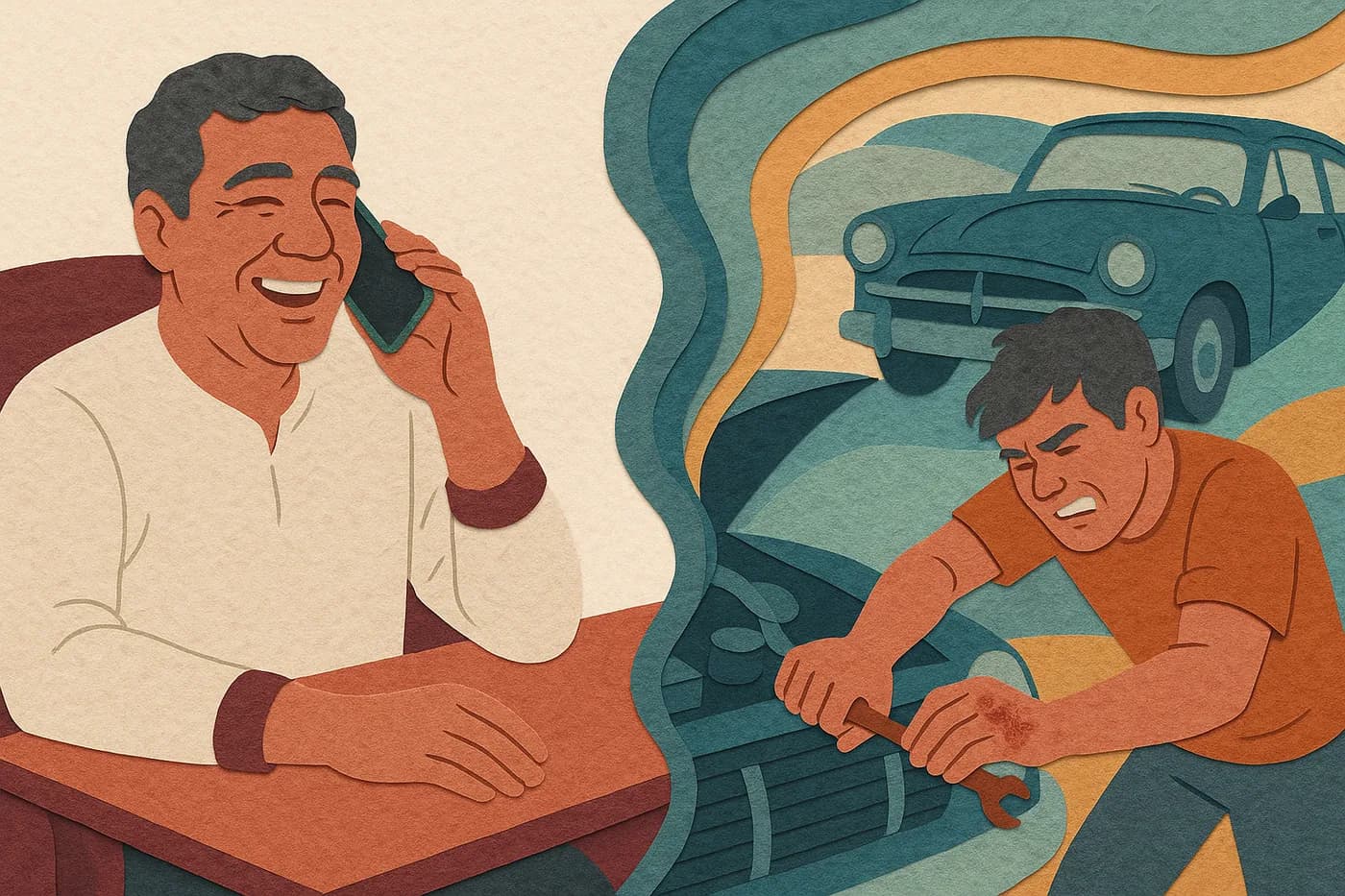
Most funny-question lists are novelty-store cards in disguise: "if you were a kitchen appliance, which one?" They get a laugh and go nowhere, because there is no real memory behind the answer.
Funny questions to ask your parents work when the humor comes from something that actually happened — a bad haircut, a car that wouldn't start, a lie that didn't hold up. The laugh is real because the memory is real. Ask about a specific mishap or a specific bad decision, not a hypothetical, and the story that comes back will have names, places, and a punchline nobody made up.
Why novelty questions produce nothing
A hypothetical has no memory attached to it, so the answer is invented on the spot — clever, maybe, but disposable. Ask "what's the worst outfit you ever wore" instead of "what's your fashion spirit animal," and the difference shows up immediately: one produces a shrug, the other produces a specific dance, a specific year, and usually a specific person who talked them into it.
The rule underneath every question below is the same one that works for serious questions: ask about something with edges — an event, an object, a place — rather than a theme or a type. "Funny" is a tone, not a category of question.
Funny questions about getting caught
Getting caught is one of the most reliable sources of a good story, because it already has a beginning, a mistake, and an ending.
- What's the dumbest thing you ever got caught doing, and who caught you?
- Did you ever lie to your parents and get away with it completely?
- What's a rule you broke constantly and never got caught for?
- What did you do the one time you actually got the car before you were supposed to?
Funny questions about looking ridiculous
Nobody minds being asked about a bad haircut. Most people have been waiting years for someone to ask.
- What's the worst haircut or outfit you ever thought looked good?
- Who talked you into your worst fashion decision, and did you blame them afterward?
- What's a photo of yourself you hope nobody ever finds?
- What did you think was cool at seventeen that makes no sense now?
Funny questions about mishaps and mistakes
These work because the storyteller already knows how it ends — which means they can tell it for the laugh instead of worrying about how it lands.
- What's the worst thing you ever did to a car, on purpose or not?
- Did you ever get fired, or nearly fired, from a job — and why?
- What's the most embarrassing thing that happened on a first date, yours or someone else's you witnessed?
- What's a chore you got so bad at that someone eventually stopped asking you to do it?
Funny questions to ask an older parent, without a party-game feel
A lot of "funny questions to ask older adults" lists are written for a group activity — icebreakers for a room of people who don't know each other. Your parent already knows you, so the same instinct that makes a hypothetical land flat there applies at home, too: skip the generic prompt and ask about something specific to their life instead.
- What's the most trouble you ever got into with your own parents?
- What did you and your friends do for fun that would sound insane to explain now?
- What's something you were completely wrong about being sure of?
- Who was the most ridiculous person you dated before you married?
How to ask without turning it into an interrogation
Ask one question and stop talking. The pause before an answer is usually someone deciding how to tell it, not a sign the question missed.
A funny question is still a question, and the same courtesies apply as any other. Some stories are funnier in the retelling than they were at the time, and a parent gets to decide which version to give, or whether to give one at all. "I don't remember" or a quick change of subject is a complete answer — not a gap to push on. Two or three questions is a good amount for one sitting; more than that turns a conversation into a checklist, funny or not.
What to do with what they tell you
A funny story is still a story, which means the same rule applies that applies to any family memory: what someone remembers is not automatically what happened, and it doesn't need to be corrected into agreement. If a sibling remembers the ending differently, both versions are worth keeping. The Oral History Association's published guidance on narrator review — letting the person who told a story see and correct what was written down before anyone treats it as settled — holds for a funny five-minute story exactly as it does for a formal interview.
Nobody's memory needs to be perfect for the story to be worth keeping. A detail that shifts between tellings is often the most human part of it.
A one-page question path
Print this, or keep two or three questions handy for the next call. Pick from a different row each time rather than working straight down the list.
| Category | Ask about | Good follow-up |
|---|---|---|
| Getting caught | A rule broken, a lie that didn't hold | "How did you get out of it?" |
| Looking ridiculous | A haircut, an outfit, a photo | "Who talked you into that?" |
| Mishaps | A car, a job, a first date gone wrong | "What happened right after?" |
| Before you knew them | Trouble with their own parents, an old flame | "Did anyone find out?" |
For questions that go beyond the funny ones — the ones about choices, people they loved, and what they were certain of and wrong about — see questions you'll wish you had asked your parents, which this list borrows its pacing from. And if a formal sit-down still feels like too much, family conversation starters that do not feel like an interview work over dinner instead.
Joan asks questions like these in ordinary phone calls, funny ones included, and remembers the story well enough to come back to it later. If your family is ready for someone else to hold that thread, join Founding Families.