
Family stories
Gifts for Grandparents Who Have Everything—Except a Place for Their Stories
A gift guide for grandparents who have everything, organized by shared time, everyday usefulness, and family connection — not another object for the shelf.
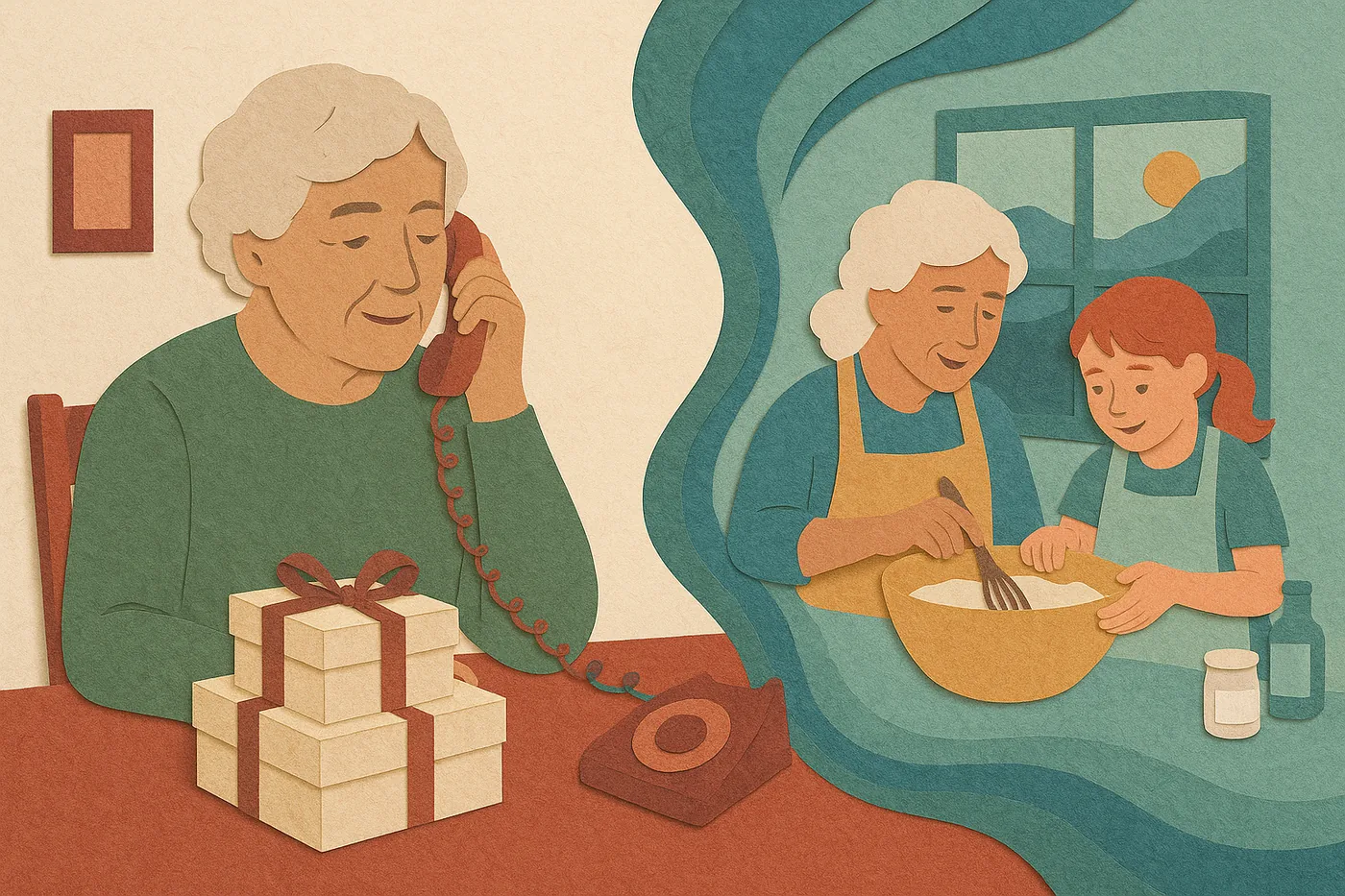
The search for gifts for grandparents who have everything runs into the same wall every year. The house is full, the closets are full, and a grandchild's budget rarely stretches to anything a grandparent hasn't already bought for themselves twice over. What is missing is never a thing. It is usually time, a small daily ease, or a reason for the family to actually talk.
Sort any idea for gifts for grandparents who have everything into one of three jobs before buying it: does it create shared time, does it make an everyday task easier, or does it build real family connection? An idea that does not clearly do one of those three is probably headed for the closet with the rest.
Why "what do they even want" gets a shrug
Ask a grandparent directly what they want and most say "nothing" or "your visit is enough." That answer is not evasive. People who have spent decades acquiring things they need have genuinely stopped tracking what is missing, and naming a want out loud can feel like asking for something rather than receiving a gift.
The better question is not about want. It is about job: what currently eats up time without anyone noticing, what small daily task has quietly gotten more of a hassle than it used to be, and what would make the next visit or phone call better than the last one. Those three questions map onto the same three jobs — shared time, usefulness, and connection — and they tend to produce an actual answer instead of a shrug.
Gifts for grandparents who have everything, sorted by the job they do
Shared time. A standing plan beats a single event. A recurring Sunday call at the same hour, a yearly trip that gets put on the calendar in advance, a shared subscription to something watched together over the phone — these work because they do not rely on anyone remembering to schedule them again next month. The test is whether the gift keeps happening after the first instance without someone having to manage it.
Everyday usefulness. This category works best when it solves one specific friction rather than treating "getting older" as a single problem to fix. A kitchen tool with an easier grip, brighter lighting in a room used at night, a phone with fewer steps to make a call, help with a recurring errand or a stack of paperwork — the common thread is that each solves something a grandparent has actually mentioned, not something a catalog assumes every grandparent needs. A gift aimed at a problem nobody named usually goes in a drawer.
Family connection. This is the category most gift lists skip, and it is often the one that lands hardest. Being asked real questions about a life that grandchildren mostly know in outline — and being genuinely listened to — is a gift some families overlook because it does not arrive gift-wrapped. For a grandparent whose full story nobody in the family has asked about in years, it can matter more than anything under a bow.
None of the three outranks the others. A grandparent who would rather spend an afternoon at the ballgame than answer questions about the past is better served by the first category, not the third. The job of this list is matching the gift to this grandparent, not defaulting to whichever category is having a moment.
What "a place for their stories" actually means
Of the three, family connection is the least understood, mostly because it is harder to picture than a standing phone call or a better reading lamp. In practice it means something specific: real questions, asked across more than one sitting, about a life that up to now the family has mostly assumed rather than heard directly.
It is not an interview and it is not a form. The difference is pacing and permission. A good version moves slowly — a few questions this visit, a few more next time — and follows wherever the answer goes instead of marching down a list. It also makes clear, every time, that any question can go unanswered. A grandparent who would rather not talk about a particular year, a particular person, or a particular loss gets to say so without being pressed for a reason.
It should never promise a tidy, verified record either. Two people who lived through the same family event often remember it differently — not because one is wrong, but because they experienced it from different places at the time. A good process for this keeps both versions rather than quietly picking one as the official account, which is consistent with what the Oral History Association's published guidance recommends: letting the person interviewed review and correct the record before anyone treats it as final. Nothing about this process should be read as tracking memory changes or any kind of cognitive check — it is simply a record of what someone chose to say, at the pace they chose to say it.
A short test before you buy anything
Run any idea against these before it gets wrapped:
- Which job is it doing — shared time, everyday usefulness, or family connection? An idea that does not clearly fit one of the three is probably a shelf item.
- Will it still be in use a year from now, or is it a one-time novelty that gets a good reaction and then goes quiet?
- Does it ask something new of them — a habit to build, technology to learn — or does it settle into a routine they already have?
- If it is a connection gift, does it leave room to skip a subject and to set the pace, rather than turning a visit into something to get through?
An idea that fails all four is not necessarily a bad one. It is just more likely to end up back on the shelf it came off of.
Where the family connection route can lead
Families who choose the connection route sometimes want more than the conversation itself — they want somewhere for what gets said to live afterward, next to the photo albums and the memory book the family keeps adding to. A family memory book should keep stories, not just answers makes the case for what separates a book people actually reopen from one that gets filled in once and put away, and it is worth reading before deciding whether this route fits your family. If the grandparent in question is more parent than grandparent to the person doing the buying, a gift for parents who have everything sorts the wider range of non-object gifts the same way, by the job each one performs.
Joan is built for the families whose gift, this year, is the third category: a standing conversation, paced over weeks, with follow-up built in and nothing entering the archive until the grandparent telling the story has approved it. It is one honest option among the ones above, not the automatic answer for every grandparent who has everything.
If that sounds like the right gift for your family, join Founding Families.