
Conversations
Grandparent Interview Questions: A Gentle One-Hour Path
A timed path of grandparent interview questions—warm-up, scene, turning point, reflection—paced across one hour so the visit stays a conversation.
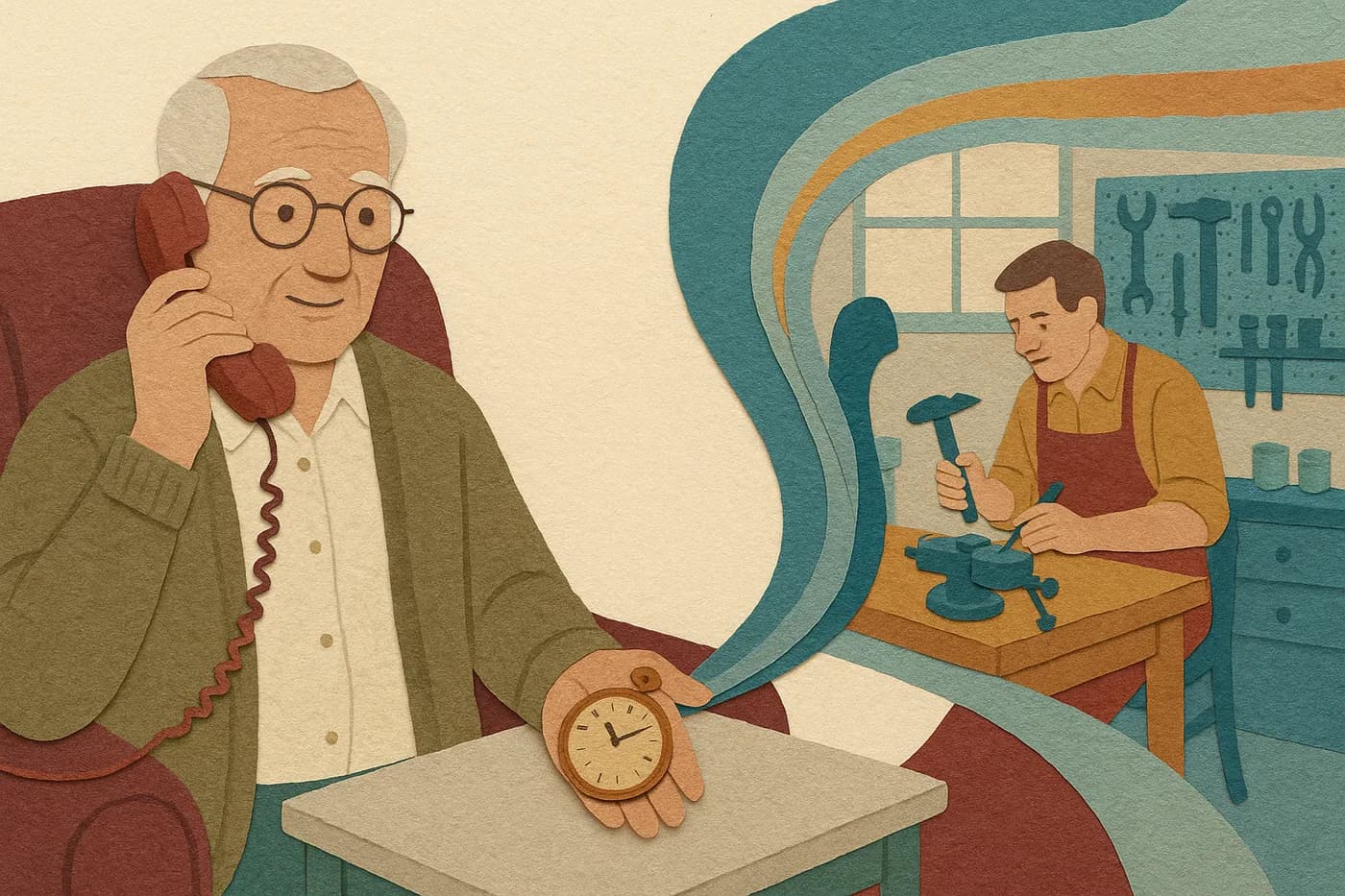
An hour with a grandparent is not enough time for a life story, and trying to cover one usually produces the opposite of what a good question is for: a string of short, general answers instead of a few real ones. The fix is not more questions. It is a shape for the hour — a sequence that opens easy, moves into a specific remembered scene, allows room for something harder, and closes before anyone is tired.
Good grandparent interview questions for a single sitting move through four stages: a low-stakes warm-up, a scene the person can picture and stand inside, one turning-point question asked once and not pushed on, and a short reflection to close. Roughly ten minutes for warm-up, twenty-five for scene, fifteen for the turning point, and the last ten for reflection and winding down — adjustable, but the order matters more than the minutes.
Minutes 0–10: warm-up questions
Start with something that costs nothing to answer. The job of a warm-up question is not to gather material; it is to get both people talking in an ordinary rhythm before anything personal is asked.
- What's one thing about today that reminds you of an ordinary day when you were young?
- What did this time of year look like in the house you grew up in?
- What's something you do every day now that you also did fifty years ago?
If any of these gets a real story instead of a quick answer, follow it — the schedule below is a default order, not a script to defend once a conversation has actually started.
Minutes 10–35: a scene, not a summary
This is the center of the hour. A summary question — "what was your childhood like?" — asks for decades at once and gets a decade-sized shrug in return. A scene question asks for one afternoon, one room, one person, and lets the rest of the memory follow it in.
- Walk me through a Saturday when you were twelve, start to finish.
- Who was in the kitchen most often, and what did it sound like in there?
- Tell me about the first job you ever had — what did the first day feel like?
- Describe the house you lived in the longest. What room did you actually spend time in?
Pick one of these, not all four, and stay with it. "What happened next?" is worth more here than a new question — it keeps the person inside the scene instead of handing them a fresh, smaller task.
Minutes 35–50: one turning-point question
Ask exactly one question from this group, and ask it once. This is the part of grandparent interview questions that people are most guarded about, and the guardedness is the point working correctly, not a problem to solve.
- What's a decision you made that changed the direction of your life?
- Was there a year that was harder than the others?
- What's something you were sure of at twenty that you're not sure of now?
If the answer is short and the subject changes right after, that is a boundary being set in real time. Let it close. A door that stays shut in one conversation is not a door that has to stay shut forever — it can be worth returning to gently, much later, with no reference to the moment it was declined.
Minutes 50–60: reflection and closing
End on something that looks forward or sums up, not something that reopens the hardest material from the middle of the hour.
- What's something you know now that you wish you'd known at my age?
- Is there someone from that time you'd want the rest of the family to know more about?
- What do you want to talk about next time?
That last question does two things: it gives the conversation a natural stopping point, and it turns a single hour into the start of a series instead of a one-time interview.
A one-page timed path
Keep this on the phone or on paper for the next visit or call — pick one question per stage rather than working down the whole list.
| Minutes | Stage | Job |
|---|---|---|
| 0–10 | Warm-up | Get talking, ask for nothing personal yet |
| 10–35 | Scene | One afternoon, one room, one person — followed all the way through |
| 35–50 | Turning point | One question, asked once, not pushed on |
| 50–60 | Reflection | Look forward, and set up the next conversation |
Pace it, and let the boundaries hold
If a question needs repeating because it wasn't heard clearly the first time, that's worth treating as a hearing issue and nothing more — not a reason to simplify the question or change the subject. The same goes for energy: stop before anyone is tired, not after. A second hour next month will get more out of a rested conversation than an extra twenty minutes squeezed out of a tired one.
None of this requires inferring how someone must be feeling. Adapt to hearing, comfort, and stamina as they show up in the room, and take a short answer at face value rather than reading a diagnosis into it.
What to do with the answers
A remembered afternoon is not the same thing as a verified date, and a good record keeps that difference rather than smoothing it away. If a grandparent and an aunt describe the same wedding or the same move differently, both versions are worth keeping — the disagreement is information, not an error to resolve in favor of whoever sounds more certain.
The Oral History Association's published guidance is useful even for a conversation with no recorder running: narrator review — letting the person hear back or read back what was captured and correct it before it's treated as settled — is worth doing whether the record is a memory or a transcript.
For the fuller category-based set this hour draws from, see questions to ask your grandparents that invite stories, not one-word answers. And oral history interview questions that open a real conversation covers the same warm-ground-to-harder-ground movement in more depth, for a longer or more deliberate session.
Joan asks questions like these over time, in ordinary phone conversations, following what a grandparent actually says instead of holding to a fixed schedule. If your family is ready for someone else to hold that pacing, join Founding Families.