
Family stories
Family History Gifts That Preserve More Than a Family Tree
Family history gifts compared by what they actually preserve — a chart of names, a box of photos, a recorded conversation, a book, or a living archive.
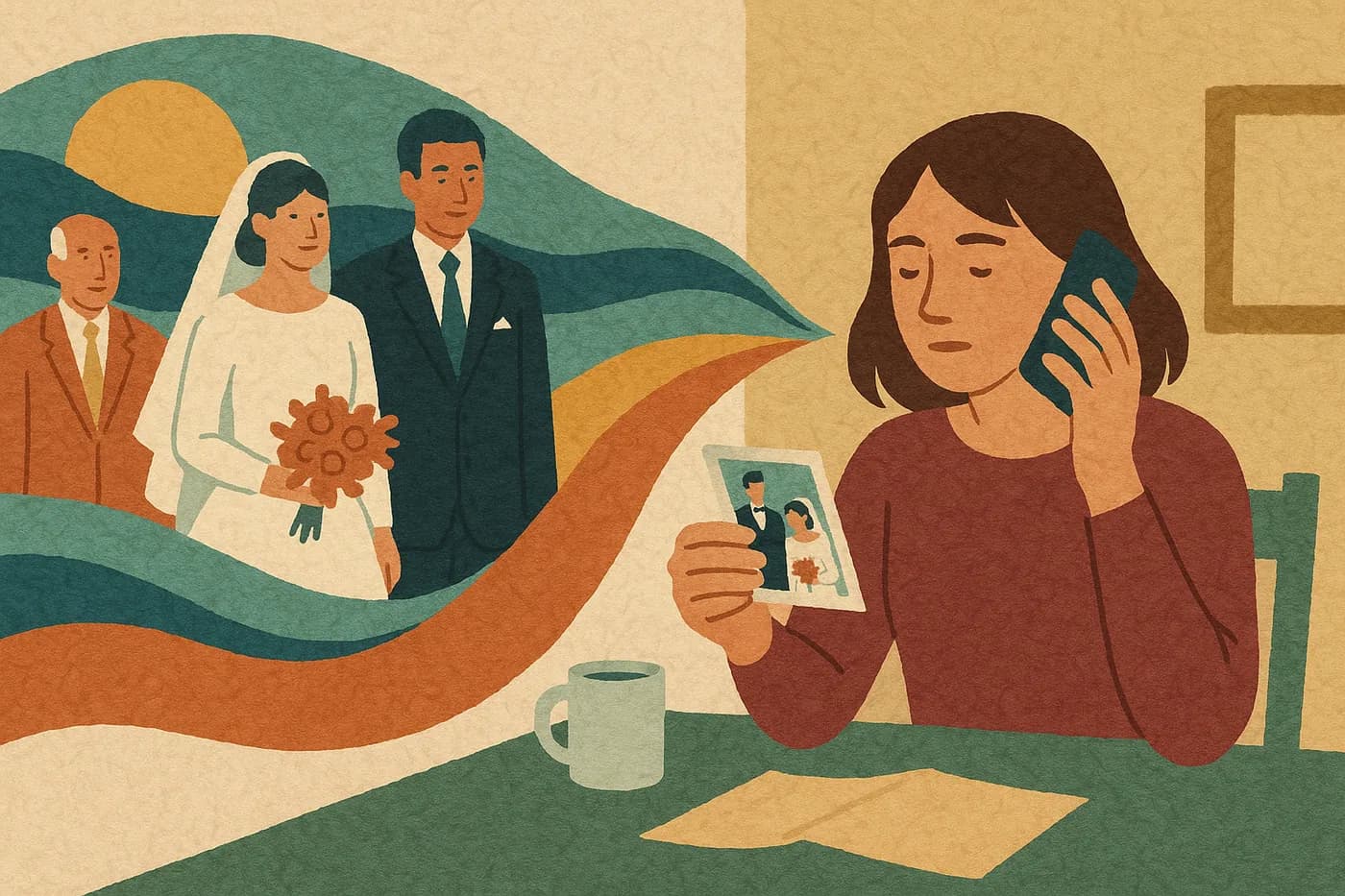
Most family history gifts arrive as a chart. A DNA and ancestry service maps out names, dates, and a shaded region on a map, and it is genuinely interesting for about an afternoon. Then it sits in an account nobody logs back into, because a chart of ancestors is not the same thing as knowing who any of them were.
Family history gifts fall into five real categories — records, photographs, conversations, books, and a living archive — and each one preserves something different while losing something else. Records preserve names and dates but no voice. Photographs preserve a face but not the story behind it. Only a conversation, captured and kept, preserves how someone actually talked about their own life. Pick the category by what the recipient's family is missing, not by which one is easiest to order.
What "family history gifts" usually means, and why that falls short
Search for the phrase and most results are the same product: a DNA test that returns an ethnicity estimate and a family tree that autofills from public records. It is a real gift, and for someone who knows almost nothing about where their family came from, it can be a genuine start.
It is also, on its own, a chart. A family tree tells a reader that a great-grandmother was born in 1911 in a particular county. It does not tell them what she was like to sit across a table from, what she found funny, or what she refused to discuss. The gap between a name on a tree and a person a family remembers is exactly what the other four categories exist to close.
The five categories, by what they preserve and what they leave out
| Category | What it preserves | What it leaves out | Best for |
|---|---|---|---|
| Records (DNA test, genealogy subscription, archive lookup) | Names, dates, places, biological connections | Voice, personality, the reasons behind a decision | A family that genuinely doesn't know its own tree yet |
| Photographs (scanning, restoration, a labeled album) | A face, a setting, a moment in time | Who is actually in the photo, and what was happening | Boxes of unlabeled prints nobody in the family can identify anymore |
| Conversations (an interview, guided or informal, recorded) | How someone spoke, what they chose to say, follow-up detail | Anything they were never asked | A living relative whose account of events has never been recorded at all |
| Books (a printed family history, a memory book) | A finished, shareable, physical object | Whatever didn't make the final cut, and any nuance flattened by editing | A family that wants something to hand to the next generation now |
| Living archive (an ongoing, growing record) | All of the above, added to over time, correctable as memory returns | Requires more setup and more patience than a single gift | A family expecting to keep gathering material for years, not one occasion |
None of the five is the wrong gift. Each one answers a different question about what a family is missing, and the right choice depends entirely on which gap actually exists in this family, not which category is trending this year.
Records: the gift most people default to first
A DNA and family-tree service is the easiest family history gift to buy, because it requires no interviewing, no writing, and no judgment about which stories matter. It is a reasonable first gift for a family that has never mapped its own tree, and it can turn up real information — a maiden name, a birth country, a connection nobody had traced.
Its limit is structural, not a flaw in any particular product. A record can only report what was written down somewhere: a certificate, a census entry, a ship's manifest. It cannot report what a person thought about the decision, what the move cost them, or what they left behind on purpose. A family tree answers "who" and "when." It has no field for "why," and most of what makes a family history worth reading lives in that field.
Photographs: a face without a caption is a puzzle, not a record
Scanning and restoring old photographs is one of the more overlooked family history gifts, and often one of the more urgent ones — prints degrade, and the people who could identify everyone in them are the ones aging fastest. A restored photograph is a genuinely useful object on its own.
What it is missing, almost always, is the caption. A box of beautifully restored photographs with no names attached is still a box of strangers to anyone two generations removed. The gift that actually preserves something is the scanning paired with a labeling session — sitting down with whoever can still identify the people in the pictures and writing down who, where, and roughly when, before that knowledge is gone along with them. A name without a story attached is little better than the unlabeled print it came from.
Conversations: the only category that preserves how someone talked
Records and photographs both preserve what happened. Only a conversation, captured rather than paraphrased, preserves how someone actually described it — the phrasing they reached for, the detail they added unprompted, the story they told slightly differently than the version already known.
This is also the category most likely to get done badly. A single long interview, done once and never followed up, tends to produce a stiff, generic account, because most people do not remember a whole life in order on request the way a form assumes they will. The better version spreads the same questions across several shorter conversations, with room for a subject to be skipped without explanation and for the same event to be remembered two different ways by two different people rather than smoothed into one. Questions to ask your grandparents that invite stories, not one-word answers lays out what that pacing looks like in practice.
Books: the format everyone eventually wants, and the one to choose last
A finished family history book is often the end goal, and it is a legitimate gift on its own — something physical, shareable, and complete enough to hand to a grandchild. The mistake is treating the book as the starting category instead of the last one. A book assembled before the records, photographs, and conversations exist has nothing to draw on but names and dates, and reads like the chart it started from.
Choose a book format only after deciding where the underlying material — the labeled photographs, the recorded conversations, the sourced facts — is actually going to live. A book with no archive behind it is a snapshot of whatever was gathered by the printing deadline; a book built from an ongoing archive can be reprinted or expanded as more comes in.
A five-question test before buying any family history gift
- What does this family actually not have — names, faces, voices, or a finished object? Buy for the gap, not for the category that's easiest to order.
- Does it require the recipient to do the work, or does someone else hold the pacing? A blank family-tree account or an unopened scanning kit is homework with a bow on it.
- Will the material it produces still make sense in twenty years without someone alive today to explain it? A caption-less photo or an unlabeled recording ages badly.
- Does it leave room for "I don't remember" or "I'd rather not say"? Family history gathered under pressure is often less accurate, not more.
- Where does what gets gathered actually live afterward — a shoebox, an account nobody else can access, or somewhere the rest of the family can find it later?
A gift that fails the last question is not wasted, but it needs a second gift eventually: somewhere for the material to land that outlives the occasion it was bought for.
Where this leads
Photographs, records, and conversations all eventually need a home, and a family memory book should keep stories, not just answers makes the case for what separates a home people actually return to from one that gets filled in once and shelved.
Joan sits in the fourth and fifth rows of the table above: a standing conversation, paced over weeks, with follow-up built in, that becomes a growing archive rather than a single occasion — and nothing enters it until the person telling the story has approved it. It is the right gift for a family that already has the records and the photographs and is missing the voice. For a family still missing the names and dates, start with records instead.
If the voice is what's missing in yours, join Founding Families.