
The archive
How to Organize Old Family Photos Before Nobody Knows Who Is in Them
A simple workflow for asking who's in the box before nobody's left to answer: interview first, label honestly, then sort — with a printable sheet.
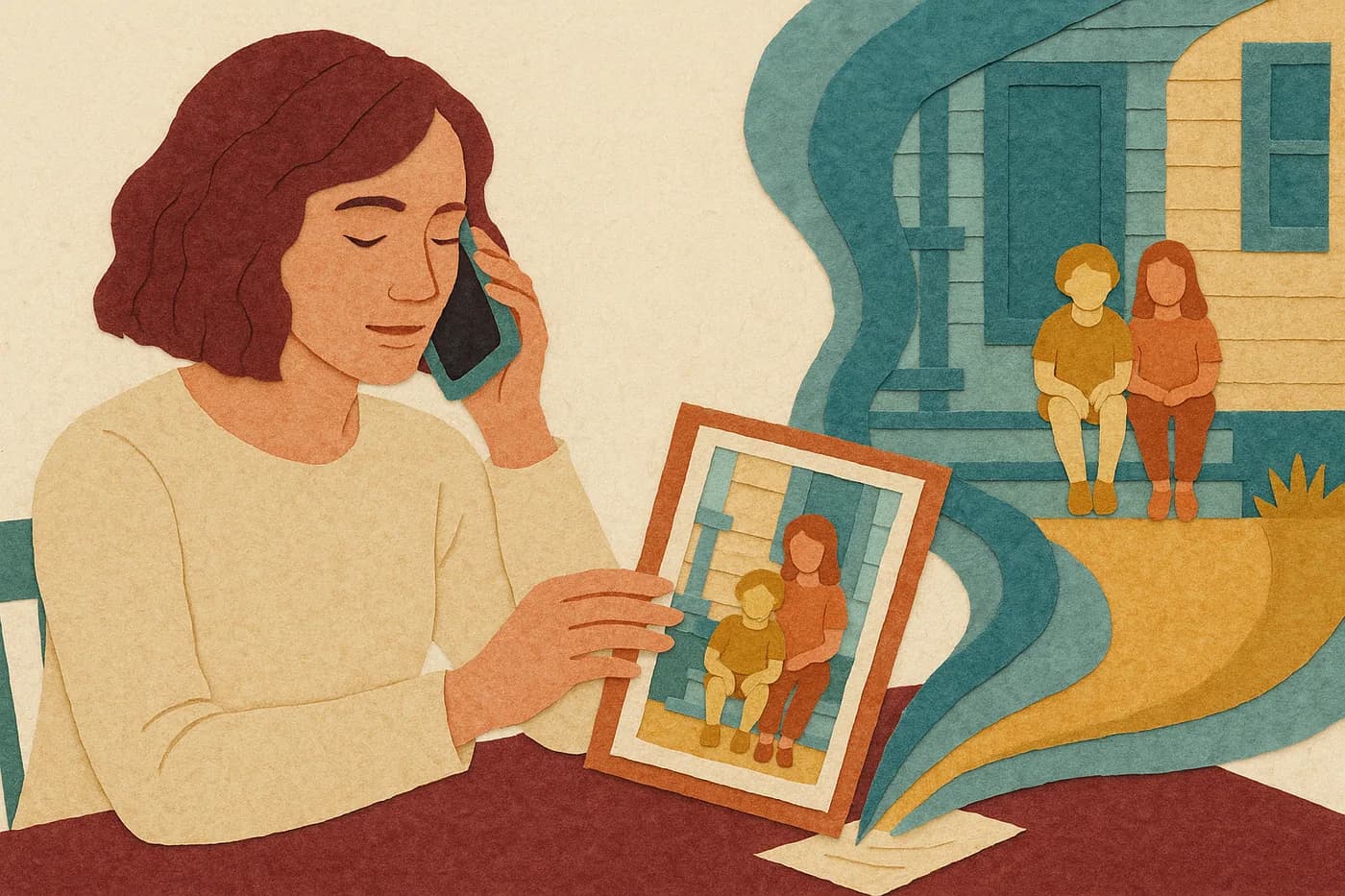
Every family has the same box: photographs with no names on the back, sorted only by which drawer they landed in. The people who could still say who's standing on that porch are usually the same people nobody's gotten around to asking.
Here's the short version of how to organize old family photos so the sorting actually holds up: ask before you sort. Interview whoever remembers the photos first, write down what they say directly on or with each photo, and only then group them by person, era, or event. Sorting by date or size feels productive, but it doesn't capture a single name — and a photo with no name attached is one generation from becoming an anonymous stranger in a box.
Why sorting by date or box doesn't solve the problem
A shoebox reorganized into a dozen labeled folders looks like progress. It usually isn't, if nobody asked who's in the pictures along the way. The actual scarce resource isn't storage — it's the handful of people who can still look at a photo and say "that's your great-uncle Ray, and that's the barn before it burned down." Once that person is gone, the photo doesn't become less real. It just stops being able to tell you anything.
This is why photo organizing projects stall or get finished wrong: they treat the problem as physical (piles, boxes, albums) when the real problem is informational (who, where, when, and how sure is anyone). Solve the physical problem first and you get a tidy box of unlabeled strangers. Solve the informational problem first, and the physical sorting takes care of itself.
The workflow: how to organize old family photos so the names survive
Four steps, done in this order, on however many photos you can manage in one sitting — a dozen is a fine session; you don't need to clear the whole box at once.
- Gather without sorting first. Pull photos together by rough era or by whichever relative might recognize them — a childhood stack for a sibling, a wedding stack for a parent — but resist the urge to organize by category before anyone has looked at them. Premature sorting tends to bury the exact photos someone would have recognized instantly.
- Ask, don't guess. Sit down with whoever is likely to know — in person, on the phone, whatever's easiest for them — and go through the photos together. Ask open questions: "Who's this with you?" "Where was this taken?" "What was happening that day?" Let the person set the pace, and let them say "I don't remember" without pressing. A photo that stays unlabeled is a smaller loss than a conversation someone didn't want to have.
- Label with the caption framework below, capturing not just the answer but how sure the person is.
- Sort last, once photos carry real information — by person, by decade, by event, whatever grouping actually helps your family use the collection. Keep the originals in acid-free sleeves or boxes rather than magnetic albums, which degrade photos over time; a phone photo or a scan of each labeled print is a reasonable backup layer, kept somewhere other than the same shelf as the originals.
Questions to ask your grandparents that invite stories, not one-word answers goes deeper on the interview itself — pacing, follow-up, and how to ask without it feeling like an interrogation. That approach applies directly to a photo session: it's the same conversation, just anchored to an image instead of a topic.
What the caption should hold, even when nobody's sure
A useful caption isn't just a name. Four things, even briefly:
| Field | What it captures | Example |
|---|---|---|
| Who | Everyone identifiable, by relationship and name | "Grandma Ruth (left), her sister Dot (right)" |
| Where and when | Place and approximate date, even a decade | "Front porch, probably late 1950s" |
| Told by | Who supplied the information | "As Uncle Ray remembered it, 2026" |
| Confidence | How sure anyone actually is | Certain · fairly sure · best guess · unknown |
That last field is the one people skip, and it's the one that matters most. A caption written as fact when it was actually someone's best guess turns a guess into a permanent record the next generation has no way to question. "Fairly sure this is Ruth's wedding, 1958" is more useful a generation from now than a confident "Ruth's wedding, 1958" that turns out to be her sister's.
Write directly on a paper sleeve or an acid-free label rather than the back of the photo itself with a regular pen — ink can bleed through decades-old paper stock. A soft photo pencil works on the back of most prints; for anything fragile or already damaged, keep the caption on an attached slip instead.
When two people remember the photo differently
This will happen, and it isn't a problem to solve — it's information to keep. If one aunt says the photo was taken at a lake house and another says it was a neighbor's yard, write down both accounts with who said what, rather than picking whichever sounds more confident. A remembered account is not a verified fact, and two people can both be telling the truth about how they remember something without either of them being wrong.
The Oral History Association's published practice of narrator review — letting the person who supplied an account see how it was recorded and correct it — applies just as well here. If you can, show the finished caption back to whoever you interviewed before treating it as settled. People often remember a second detail once they see the first one written down.
What this workflow doesn't fix
It won't recover a name nobody in the family remembers. Some photos will stay labeled "unknown woman, possibly a cousin" forever, and that's a more honest outcome than inventing a name to close the gap. It also isn't a preservation plan on its own — photographs still need physical protection from light, humidity, and handling regardless of how well they're captioned, and that's a separate project from the one this workflow covers.
What it does fix is the part that's actually running out of time: not the photo paper, which can last a long while properly stored, but the handful of people who can still supply the who. The archive is the product, not the book makes a related case about recordings and stories — that the lasting value is the record of who-knew-what, not any single object it eventually becomes. A labeled photograph is a small version of the same idea: the caption is the archive, and the print is just where it happens to live.
A simple sheet to bring to the conversation
Print or copy this before you sit down with someone:
- Photo location or box (so you can find it again)
- Who is in it, by name and relationship
- Where and roughly when it was taken
- What was happening, in the storyteller's own words if possible
- Who supplied this information, and the date
- Confidence: certain / fairly sure / best guess / unknown
- Anything the storyteller wants noted but not shared further
That last line matters. Not everyone wants every story attached to their name kept and passed down without limits, and asking is part of the process, not an afterthought.
None of this requires special equipment or a big project weekend — a dozen photos, one relative, twenty unhurried minutes, and a pencil is enough to start. If your family eventually wants that same kind of paced, one-conversation-at-a-time approach applied to the stories themselves, not just the photographs, Founding Families is where that starts.