
The craft
How to Write a Life Story From Spoken Memories
A four-pass method for turning a recorded conversation into a written life story that keeps a person's real order, voice, and unresolved edges intact.
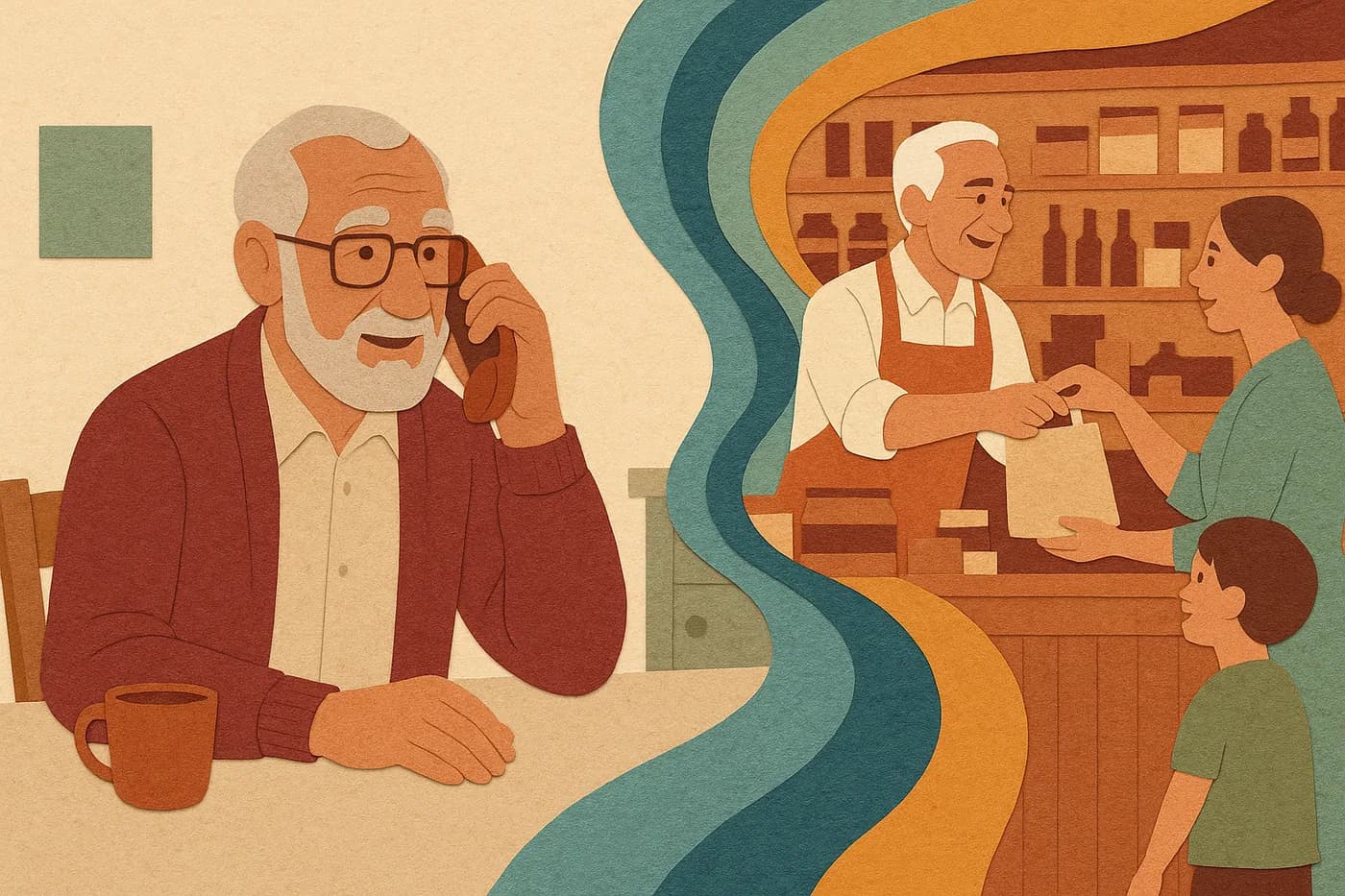
Most attempts at a life story start the same way: an hour or two of someone talking, and a blank document waiting to turn that call into something more permanent. The gap between those two things is where most attempts stall — not for lack of material, but for lack of a process that gets from one to the other without flattening what made the conversation worth keeping.
How to write a life story: work in passes, not one long draft
The direct path is four passes, not one polished attempt: pull scenes out of the recording rather than transcribing it whole, arrange those scenes in the order the person told them, decide sentence by sentence what to keep in their own words and what to smooth, and put the draft back in front of them before calling any of it finished. Writing straight to a clean paragraph is what makes a life story read like it was written about someone, instead of by them.
Pass one: pull scenes out of the recording, not a transcript
A raw transcript is not a draft — it's raw material, and most of it will not survive. A ninety-minute conversation might yield six or eight scenes worth keeping: a specific morning, a decision, an argument, a room described in enough detail that a reader can stand in it. Everything else — the "you know," the false starts, the tangents that dead-end — is part of how a person talks, not part of what a reader needs on the page.
Listen once for the through-line, then a second time to mark timestamps where a scene actually starts: not "when they talk about their childhood" but "when they start describing the kitchen table their father built." Specificity at this stage saves the later passes from guessing.
A scene worth keeping usually has a place, at least one other person in it, and something that happens — not just a description of how things generally were. "We didn't have much money" is a fact about a period. "My mother sent me to the store with exact change and I lost a dime on the way and couldn't go home" is a scene. The second one carries the first one's meaning without stating it.
Pass two: order it the way they told it, then check it against the calendar
People do not remember a life in sequence. They remember it in rooms, and a story about a wedding can surface in the middle of a sentence about a totally different winter. Arranging everything into strict chronology produces a cleaner-looking document and a worse portrait — it erases the associations that were the actual shape of the memory.
The working method: keep the teller's order as the spine, then run a second, quieter pass to note the real dates and ages underneath each scene — not to reorder the story, but so a reader (and the family, decades later) can still place each moment in time. Both things can be true on the same page: the scene stays where they put it, and a caption or a light note carries the calendar fact.
Pass three: keep the voice, not just the facts
This is the pass that decides whether the finished piece sounds like a record or like a summary. "Winter lasted too long that year" is a person talking. "The winters were difficult" is a caption someone wrote about them. The specific, slightly odd phrasing — the word someone always uses, the habit of finishing a thought with a joke — is the part that makes a family recognize the piece as theirs on the first read.
The rule that holds up in practice: keep sentence structure and word choice wherever the meaning is clear, and only smooth grammar where leaving it unsmoothed would confuse a reader rather than characterize the speaker. When in doubt, keep more of the original phrasing than instinct suggests — it's much easier to tighten a sentence later than to recover a voice that got edited into house style.
When two accounts disagree, keep both
A life story built from more than one conversation will eventually hit a contradiction — a sibling remembers the argument happening at Thanksgiving, the storyteller is certain it was Easter. Writing toward the more confident-sounding version produces a tidier document and a less honest one. The Oral History Association's published practice guidelines treat a recorded account as exactly that — a remembered account, not a verified historical fact — and recommend preserving disagreement rather than resolving it on the page.
In practice, that means a short editorial note where it matters ("accounts differ on the year") rather than silently picking a winner. The instinct to smooth over a contradiction is the same instinct that flattens voice in pass three — worth resisting for the same reason.
Pass four: verify before anything is called finished
A life story is not done when the prose reads well. It's done when the person it's about — or, where they've asked someone else to hold this on their behalf, the family member responsible for it — has read the draft against the actual recording and confirmed it holds up: names spelled right, events placed correctly, nothing invented to bridge a gap in the tape. This pass exists specifically to catch the two failure modes of the earlier ones — a scene reordered until it drifts from what was actually said, or a sentence smoothed until it says something the person didn't.
Treat a "that's not quite right" from this pass as useful information, not a problem with the process. It usually means passes one through three moved too fast in one spot, and it's far cheaper to fix before the piece is called finished than after.
A four-pass checklist to work from
Use this as a working order for a single recorded conversation, or for combining several sessions into one piece:
- Scene pass — Listen through once for the shape, then again to mark timestamps for six to ten scenes worth keeping. Cut everything else from consideration, but don't delete the original recording.
- Order pass — Draft in the sequence the person told it. In a separate note, record the real year or approximate age for each scene, so the timeline is recoverable without reshuffling the story.
- Voice pass — Read each scene against the recording. Keep distinctive phrasing and sentence rhythm; smooth only what would otherwise confuse a reader. Flag any sentence you're not sure about rather than guessing.
- Verification pass — Put the draft in front of the storyteller (or the responsible family member) alongside the recording. Fix anything that drifted. Leave real disagreements visible instead of resolving them for the page.
Where this fits into a longer record
This four-pass method covers turning one conversation into a written piece. What makes a life story sound like the person who lived it goes further into why the voice pass matters as much as it does, and what gets lost when a story is optimized for readability instead of recognizability. If you're still gathering the conversations this method works from, life story interview questions organized by the shape of a life is a starting shape for the calls themselves.
If you'd rather have someone else run all four passes — call, transcript, scenes, and a draft you approve before anything is kept — join Founding Families to see how Joan does it.