
The craft
What Is a Legacy Interview, and What Should the Family Receive Afterward?
A legacy interview is a process, not a single recording. What separates it from a one-time session, and the four things a family should receive afterward.
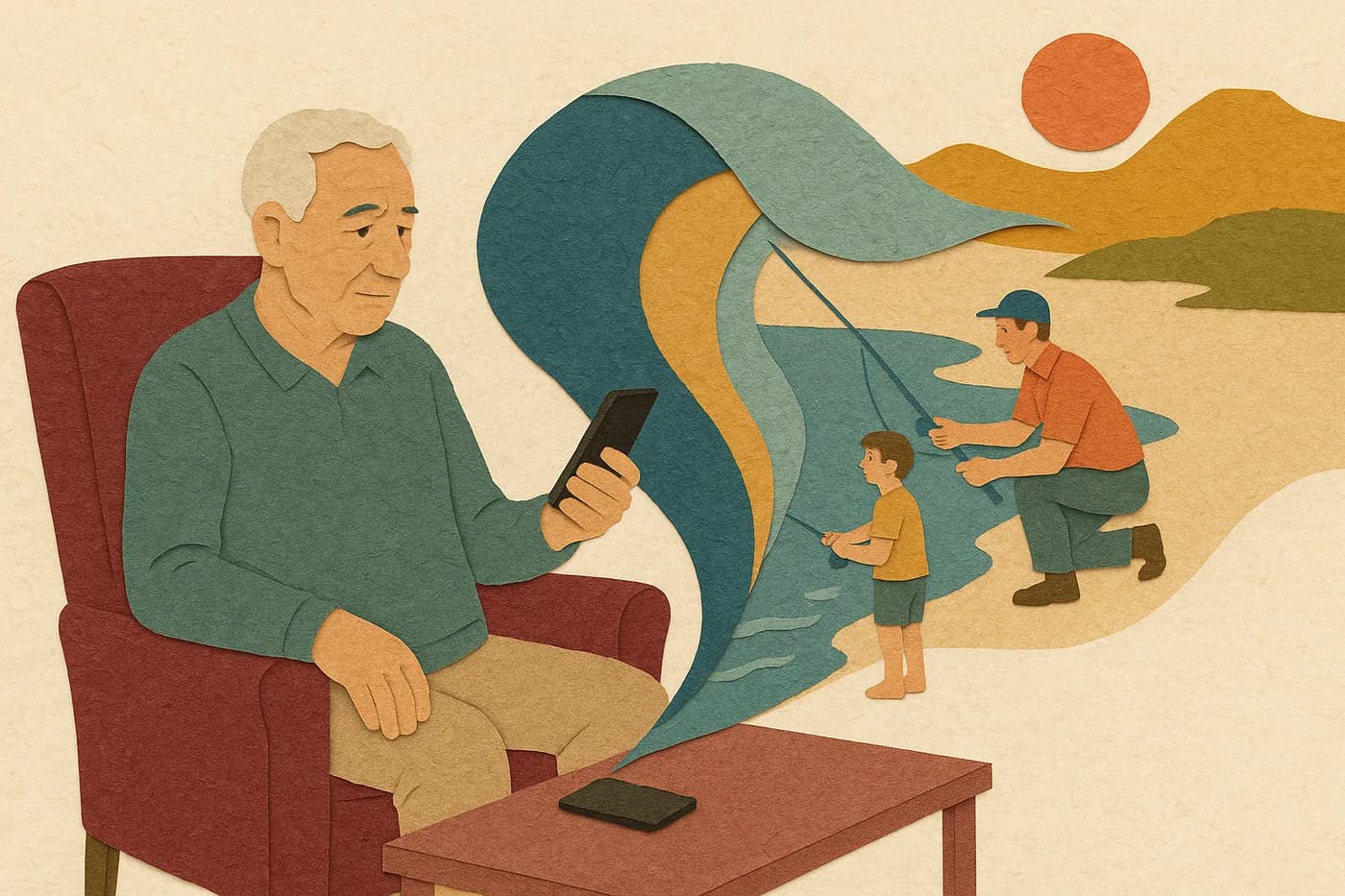
Families searching for "legacy interview" usually already have the right instinct: sit someone down, ask them about their life, keep the recording. The instinct is close. The term covers more than a single sitting, and the difference is where most of the value actually lives.
A legacy interview is a structured conversation, usually spread across more than one session, in which a person tells their own life story in their own words so the family can keep the account — not just the facts inside it. What separates it from a one-time recording is follow-up: a second conversation that returns to what the first one raised, and a review step before anything is treated as finished.
What a single recording session cannot do
One conversation produces one pass. The person answers what they are asked, in whatever order it occurs to them, and the recording ends when the visit does.
What a single session almost never catches is what comes up after — the name that surfaces the next morning, the detail someone gets right only on the second telling, the correction to something said the first time. Memory works by return, not by download. A person describing sixty years in one sitting will leave things out not because they are hiding them, but because nobody circled back to ask.
That is also why a legacy interview should never promise a complete or perfectly accurate record. What it can promise is a process built to catch more of it than a single session would, and to preserve disagreement and uncertainty rather than paper over them.
The parts of an actual legacy interview process
Preparation. Before recording starts, the storyteller should know roughly what will be asked, understand that participation is voluntary at every stage, and know they can decline a question or stop the recording without needing to explain why.
The conversation, more than once. The first session covers ground. Later sessions follow up on what the first one raised — a name mentioned in passing, a year that did not line up, a story someone else in the family remembers differently. This is where a legacy interview earns its name over a recorded chat.
Review. The storyteller hears or reads back what was captured before it is treated as final, and can correct, remove, or add context. This step is standard practice in oral history work — the Oral History Association's published guidance treats narrator review as part of the process, not an optional courtesy — and it matters as much for a family project as for an archival one.
Delivery. The family receives the material in a form they can actually keep and use, not just a promise that a recording exists somewhere.
What the family should receive afterward
This is the part that gets skipped when "legacy interview" means one recorded hour and a thank-you. A finished legacy interview should hand the family:
| What | Why it matters |
|---|---|
| The raw recordings | The audio holds phrasing, pauses, and tone that any written version loses |
| A transcript | Makes the material searchable and readable without playing hours of audio |
| An index of what was covered | Which session covered which years, people, and topics — without this, hours of recording become hard to use |
| A note of what was reviewed and what was left open | What the storyteller confirmed, what they asked to leave out, and what remains genuinely uncertain |
| Plain storage and access instructions | Where the files live, who can reach them, and how to add to them later |
The middle two rows are the ones people leave out, and they are the ones that make the difference between an archive a family can actually use in ten years and a folder of files nobody remembers the contents of.
When a single session is genuinely enough
Not every recorded conversation needs to be a legacy interview, and calling every one by that name overstates what a short session can do. A single conversation is a reasonable goal on its own when the aim is narrower — one occasion, one relationship, one story someone has told for years and the family finally wants on record. It only becomes a problem when a family expects a one-hour recording to deliver what only a process with follow-up and review can.
The honest version is not "a single session is worthless." It is "know which one you're doing before you start, so you're not disappointed afterward that a single afternoon didn't capture a whole life."
The difference this makes in practice
The distinction here is close to the one in a prompt book is not a biographer — a fixed list of questions produces isolated answers, and a single session produces the same. What either one is missing is someone who remembers what was said last time, notices what needs following up, and waits for the answer instead of moving to the next question.
Joan runs the process version: a standing phone conversation, paced over weeks rather than compressed into an afternoon, with follow-up built in and nothing added to the family archive until the storyteller has reviewed and approved it. If that is closer to what your family actually needs, join Founding Families.